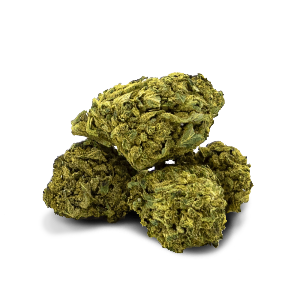
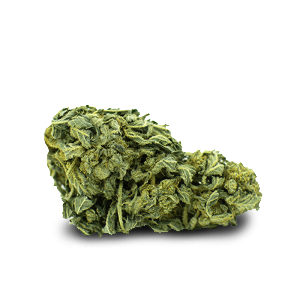
"Smoking a CBD joint to relax" is a familiar image — but not the best idea from a health standpoint. Combustion is the worst way to consume CBD. Here is why, and the real alternatives.
Why combustion is a problem
Smoking (burning) a CBD flower produces the same lung toxicity as a regular cigarette:
1. Tar
Combustion (700-900 °C) at the tip of the joint produces tar that settles on the bronchi and alveoli. Tar is what is carcinogenic — not tobacco or cannabis as such.
2. Carbon monoxide (CO)
Incomplete combustion produces CO, which binds to haemoglobin and reduces oxygen transport. No health benefit, just a physiological cost.
3. Fine particles (PM2.5)
Ultra-fine particles that penetrate deep into the alveoli and fuel chronic airway inflammation.
4. Partial THCa → THC conversion
THCa, inactive in the raw flower, converts into active THC under the extreme heat of combustion. A legal CBD flower at 0.25% THC can yield the equivalent of 0.4-0.5% THC after burning — a higher risk of a positive saliva test.
Comparison: combustion vs vaporisation
| Criterion | Smoking (combustion) | Vaporising | |---|---|---| | Temperature | 700-900 °C | 160-230 °C | | Tar | ✗ Present | ✓ None | | Carbon monoxide | ✗ Present | ✓ None | | THCa → THC conversion | ✗ Maximal | ⚠ Low (temperature-dependent) | | Bioavailability | ~20% | 35-45% | | Terpene preservation | ✗ Burnt | ✓ Preserved | | Taste | Acrid, burnt | Pure, aromatic | | Discretion (smell) | Strong residual smell | Light, dissipates fast |
Clear verdict: vaporisation wins on every criterion except the upfront cost of the device.
The clean alternatives
Alternative 1 — Dry-herb vaporisation
- Devices: Mighty/Crafty (Storz & Bickel), DynaVap M, Pax Plus
- Temperature: 180-210 °C (preserves terpenes, activates cannabinoids)
- Pros: zero combustion, maximal bioavailability, intact terpenes
- Cons: device cost (€80-300)
Alternative 2 — CBD e-liquid (vape pen)
- Device: vape pen with an EU-certified CBD e-liquid cartridge
- Pros: discreet, convenient on the go
- Cons: variable quality across brands; watch the additives
Alternative 3 — Sublingual oil
- Form: 10-20% CBD oil
- Pros: no lung risk, precise dosing, 6-8 h duration
- Cons: slower onset (15-30 min vs 2-5 min inhaled)
Alternative 4 — Fat-based infusion
- Form: CBD flower infused in coconut milk or butter
- Pros: convivial, prolonged action (4-6 h)
- Cons: slow onset (60-120 min)
If you still want to smoke
For those who will smoke anyway, a few harm-reduction rules:
- No tobacco: adding nicotine doubles the risk
- Ceramic or glass tip: tempers the extreme heat
- Small amounts: several small joints rather than one big one
- Unbleached paper: chlorine-free, rice or hemp paper
- Extra hydration: before and after, for the mucous membranes
- No deep prolonged inhalation: no extra benefit, just more toxins absorbed
- Occasional only
- Tashkin DP. "Effects of marijuana smoking on the lung" Ann Am Thorac Soc. 2013.
- Earleywine M et al. "Decreased respiratory symptoms in cannabis users who vaporize" Harm Reduct J. 2007.
- Pomahacova B et al. "Cannabis smoke condensate III" Inhal Toxicol. 2009.
Absolute contraindications to smoking CBD
❌ Asthma: combustion triggers or worsens attacks ❌ COPD: worsens chronic lung disease ❌ Pregnancy: risk to the foetus (CO and other toxins) ❌ Cardiovascular disease: CO impairs oxygenation ❌ Adolescents / developing brain: avoid even pure CBD
Conclusion
If you enjoy inhalation for its speed, vaporise rather than smoke. If the device cost puts you off, start with a DynaVap (€40-60) or an EU-certified CBD e-liquid vape pen. Your lungs will thank you.