The question keeps coming up: is CBD really legal in Europe? Yes — but with significant variations between countries. This is the verified state of European law in 2026, based on official texts (EU Regulation 2021/2115, French decree of 30 December 2021, CJEU ruling Kanavape C-663/18).
In a single sentence: the 2026 rule
CBD is legal in the European Union if the finished product contains less than 0.3 % THC and uses hemp varieties listed in the European catalogue (Regulation EU 2021/2115).
Any product exceeding 0.3 % THC, or containing one of the recently scheduled synthetic cannabinoids (HHC, THCP, H4-CBD…), is illegal across most of the EU — with criminal penalties up to €7.5 million and 5 years imprisonment for sellers.
What is authorised in 2026
Legal cannabinoids
Four cannabinoids remain freely sold:
- CBD (cannabidiol) — the most studied, non-psychotropic
- CBG (cannabigerol) — the "mother cell" of cannabinoids
- CBN (cannabinol) — derived from THC oxidation, but non-psychotropic
- CBC (cannabichromene) — anti-inflammatory, less studied
Authorised product formats
The Conseil d'État ruling of 29 December 2022 settled it: all product forms are freely sold in France, provided they meet the 0.3 % THC threshold:
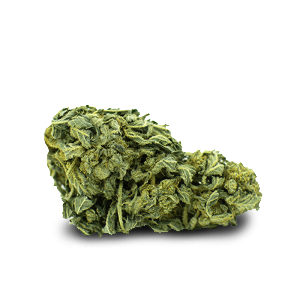
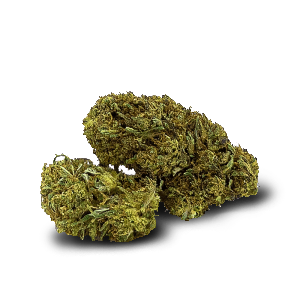
- Dried flowers and leaves (the ban from December 2021 was annulled)
- Oils, capsules, infusions
- Cosmetics (creams, balms)
- E-liquids for vape pens
- Foods and drinks (subject to the EU Novel Food authorisation procedure)
Authorised hemp varieties
Only varieties listed in the European Common Catalogue may be cultivated. Examples: Futura 75, Fedora 17, Santhica 27, Felina 32. Any other variety — including famous American indica genetics — is prohibited at cultivation, even if the finished product respects 0.3 % THC.
What is banned in 2026
Synthetic cannabinoids scheduled in 2023
Since 11 June 2023, France's ANSM (National Agency for the Safety of Medicines) has scheduled the following as controlled substances:
- HHC (hexahydrocannabinol)
- HHC-O (HHC-acetate)
- HHC-P (hexahydrocannabiphorol)
- THCP (tetrahydrocannabiphorol)
- Synthetic THCV
- H4-CBD (tetrahydrocannabidiol)
- H2-CBD (hydroxy-CBD)
These molecules are totally banned in France. Similar measures are being adopted across the EU (Belgium, Italy, Germany have already aligned).
Why these bans? ANSM justifies them by "insufficient toxicology evidence" and "pharmacological profile similar to THC". Several intoxication cases were reported in 2022-2023.
Delta-9-THC
The delta-9-THC remains the primary controlled molecule. A CBD product exceeding 0.3 % THC is reclassified as a controlled substance. Buyers acting in good faith are not criminally liable; sellers are.
The special case of delta-8-THC
Delta-8-THC isn't specifically scheduled by ANSM in 2026, but in practice:
- It's an isomer of THC, psychotropic in effect
- It's chemically synthesised from CBD (therefore "synthetic")
- It falls under the general ban on "synthetic psychoactive substances"
Customs regularly seize delta-8 products. Avoid in France and most of Europe.
Buying CBD: legal checklist
Before purchasing, verify:
- Origin: produced/extracted in an EU member state or Switzerland (US COAs follow different regulation)
- COA (Certificate of Analysis): any serious seller provides a lab certificate from an independent laboratory attesting THC < 0.3 %
- Cannabinoid list: if the product claims HHC, THCP, H4-CBD or H2-CBD → illegal in France since 2023
- Labelling: a CBD product cannot make therapeutic claims ("cures", "heals", "treats"). Those wordings are reserved for licensed medicines.
- Decree of 30 December 2021 (France) — application of article R. 5132-86 of the public health code
- Conseil d'État, decision n° 444887 of 29 December 2022 — annulment of the flower ban
- ANSM decision of 11 June 2023 — scheduling HHC and derivatives
- Court of Justice of the European Union, ruling C-663/18 of 19 November 2020 (Kanavape case law)
- Regulation (EU) 2021/2115 — authorised hemp varieties
Penalties
| Offence | Legal entity (seller) | Individual (buyer) | |---|---|---| | Selling CBD > 0.3 % THC | €7.5M + 5 years | — | | Selling HHC/THCP/H4-CBD | €7.5M + 5 years | — | | Purchasing/possessing HHC | — | €3,750 + 1 year | | Buying > 0.3 % product in good faith | — | No penalty if good faith proven |
Official sources
Conclusion
In 2026, CBD is firmly legal in France for CBD/CBG/CBN/CBC molecules at less than 0.3 % THC. The 2023 wave of bans clarified the landscape: any synthetic cannabinoid is now prohibited. The simple rule: if it's not CBD/CBG/CBN/CBC, it's not legal.
When buying, always request the COA. It's your only legal safeguard.