"I took a few drops of CBD oil last night — can I drive this morning?" We hear this question daily. The answer isn't the same depending on what product you consumed. Here's everything you need to know, updated for 2026.
What does French law say?
The French Highway Code, article L235-1, sanctions driving "after use of substances or plants classified as narcotics". The key word: narcotics.
CBD is not a narcotic. The WHO, ANSM, and European case law (Kanavape ruling, CJEU 2020) confirm this. Therefore:
- Driving after pure CBD = legal, no offence.
- Driving after CBD with THC traces = risky if the saliva test detects THC.
Law enforcement does not test for CBD — they only test for delta-9-THC in saliva.
Does CBD impair driving ability?
This is the big scientific question. Answer: no, at normal dose.
The reference study: Arkell et al. 2020 (University of Sydney), published in JAMA. Protocol:
- 26 adult drivers
- Vaporisation of 13.75 mg CBD (typical dose)
- Driving simulator tests 30 min and 4h later
Results:
- No degradation of driving performance vs placebo
- No effect on reaction time, lane keeping, vigilance
- At equivalent THC dose: significant degradation
Researchers' conclusion: "CBD does not impair driving performance, while THC does."
A broader review (McCartney 2021) confirms: at doses < 200 mg, CBD doesn't impair driving. Above that, drowsiness is possible.
The real risk: residual THC
This is where it gets complicated. CBD products sold in France can legally contain up to 0.3 % THC. Three scenarios:
Scenario 1: isolate product (99 %+ pure CBD)
- THC level: 0.00 % (undetectable)
- Saliva test risk: none
- Driving: unrestricted, anytime
Scenario 2: broad spectrum oil
- THC level: 0.00 % to 0.02 % depending on brand
- Saliva test risk: virtually nil
- Driving: unrestricted, except for extreme consumption (> 100 mg/dose)
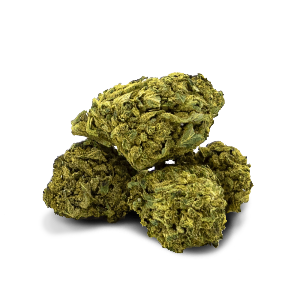
Scenario 3: full spectrum oil / flowers
- THC level: 0.1 % to 0.3 %
- Saliva test risk: real for 6 to 24h after consumption
- Driving: wait minimum 6h (oil) or 24h (flowers inhaled)
Quick reference table
| Product consumed | Recommended delay before driving | |---|---| | CBD isolate (capsule, oil) | 0h | | Broad spectrum (no THC, COA "< LOQ") | 0h | | Full spectrum, dose < 20 mg CBD | 6h | | Full spectrum, dose > 20 mg CBD | 12h | | CBD flower vaporised (1 dose) | 24h | | CBD resin inhaled (1 dose) | 24h | | Daily CBD flower use | 48-72h after cessation |
If you test positive
- Don't panic. The saliva test is not a conviction — it's an indication.
- Request the blood test counter-analysis (article R235-9). You have this right. The blood test is more accurate, and the detection threshold is higher.
- Keep your evidence: purchase invoice, COA of consumed product, screenshot of merchant page (URL + date).
- Hire a specialist traffic law lawyer. Several rulings since 2023 have acquitted drivers who proved consumption of legal CBD products and provided a COA.
- 6 license points deducted
- Fine up to €4,500
- Up to 2 years prison
- Administrative license suspension up to 3 years
- Possible license cancellation with 3-year prohibition
- Arkell TR et al. "Effect of Cannabidiol and Δ⁹-THC on Driving Performance" JAMA. 2020.
- McCartney D et al. "Cannabidiol and Driving: A Systematic Review" J Cannabis Res. 2021.
- French Highway Code, articles L235-1, R235-1 to R235-12
- Cour de Cassation, ruling n° 22-86.234 of 14 March 2023 (acquittal for legal CBD)
Penalties
If the blood test confirms THC > 1 ng/mL:
The simple precaution rule
If you drive regularly (work, school runs…), three safe options:
✅ CBD isolate or broad spectrum without THC ✅ Verify the COA before purchase — the THC line should read "< LOQ" or "Not detected" ✅ Prefer sublingual intake (oil) over combustion / vaporisation of flowers