This is the question we get the most: "I'm driving tomorrow — can I take CBD tonight?" The honest answer: it depends on the product. Not CBD itself, but the THC traces it may contain.
How does a saliva drug test work?
UK and EU law enforcement primarily use immunological tests (most common: DrugWipe 6S). These tests detect the presence of delta-9-THC in saliva, above a typical threshold of 1 ng/mL (1 nanogram per millilitre).
What the test detects:
- ✅ delta-9-THC (the psychoactive cannabis molecule)
- ❌ CBD (no reaction triggered)
- ❌ CBG, CBN, CBC (same)
- ❌ HHC, THCP (some recent kits may detect them since 2024, but it's not standardised)
Direct consequence: if your CBD product contains 0 % THC, the saliva test cannot be positive, regardless of dose.
The trap: legal THC traces
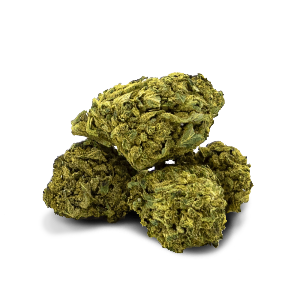
This is where it gets complicated. In France, a CBD product can legally contain up to 0.3 % THC. On paper, that's not much. But on 1 gram of flower, that represents up to 3 mg of THC — equivalent to half a light joint.
Documented real-world cases
Study Spindle et al. 2020 (Johns Hopkins): out of 11 volunteers consuming a single dose of 0.3 % THC CBD flower, 6 out of 11 tested positive on saliva 1 hour after inhalation. At 4h, 3 remained positive. At 24h, none.
Scientific conclusion: the 0.3 % THC threshold can suffice to trigger a test, especially in the first hours after inhalation.
Which products are safe for driving?
Here's the risk hierarchy, from safest to riskiest:
🟢 Safe — Pure CBD isolate
- Form: crystalline powder or oil based on isolate
- THC: not detected (< 0.01 %)
- Saliva test risk: none
- Preferred if you drive regularly.
🟢 Safe — Broad Spectrum without THC
- Form: oil, capsules
- THC: removed by chromatography (< LOQ on COA)
- Saliva test risk: virtually nil
- Contains other cannabinoids (CBG, CBN…) but no THC.
🟡 Moderate risk — Full Spectrum / oils
- Form: full spectrum oil
- THC: 0.1 to 0.3 %
- Saliva test risk: low at moderate dose, moderate above 30 mg CBD per intake
- Wait 6 to 12 hours before driving.
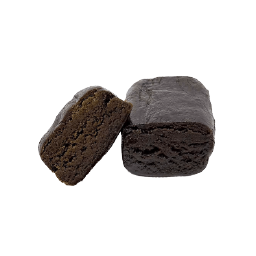
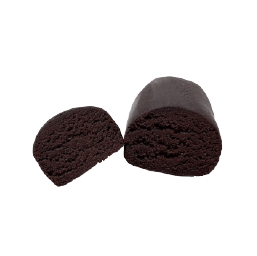
🔴 High risk — CBD flowers and resins
- Form: dried flowers, CBD hash
- THC: 0.15 to 0.3 % (close to legal max)
- Saliva test risk: high for 6-24h post-inhalation
- Avoid completely if driving within 24h.
How long should you wait?
Based on published studies (Spindle 2020, Lee 2021, Hädener 2019):
| Product | Safe delay before driving | |---|---| | Pure CBD isolate | Immediate (0h) | | Broad Spectrum no-THC | Immediate (0h) | | Moderate Full Spectrum (oil, < 20mg/dose) | 6 hours | | High dose Full Spectrum | 12 hours | | CBD flower inhaled (1 use) | 24 hours | | Regular CBD flower use | 48-72 hours |
What to do if you test positive
Four immediate steps:
- Stay calm. The saliva test is only indicative.
- Request the blood test counter-analysis. This is your right (article R235-9, French Highway Code). The blood test is more accurate and the threshold is higher.
- Keep purchase proof: receipt, COA of the consumed product, screenshot of the merchant page. This attests legal product consumption.
- Plead good faith: specialist road traffic lawyer. Several rulings since 2023 have acquitted drivers who proved consumption of legal CBD products.
- Spindle TR et al. "Acute effects of smoked and vaporized cannabis in healthy adults..." JAMA Network Open, 2020.
- Hädener M et al. "Detection of Δ⁹-THC in saliva..." Forensic Science International, 2019.
- French Highway Code, articles R235-1 to R235-12
- Decree of 13 December 2016 on drug screening
The golden rule to remember
If you drive regularly: consume only "isolate" or "broad spectrum no-THC" products. For other forms, allow at least 12 hours of margin.
And above all: demand the COA. A seller who can't provide a certificate of analysis for the consumed batch is not serious. It's also your best protection during a roadside check.